

How a survey goes out
Closing a ticket is what starts a survey. Moving a ticket to Cancelled never does.1
The ticket is closed
Any way of closing counts: the status picker on the ticket, a bulk status change in the inbox, or a conversation that ends and closes its ticket.
2
Chatbase waits
The Send after delay gives the team time to undo a close made by mistake. Reopening the ticket before the delay is up cancels the survey: with the delay set to two hours, a ticket closed by accident and reopened inside those two hours is never surveyed. Closing it again later starts the wait over.
3
The ticket is checked
When the delay is up, the ticket is checked against the rules below. A ticket that fails a check is recorded as not surveyed, with the reason, so coverage stays honest.
4
The email is sent
One email goes to the address on the ticket, from the sender you chose. The link inside works for 30 days.
- The channel cannot receive email. Tickets from WhatsApp, Messenger, Instagram, and Facebook or Instagram comments are left out. They also do not count against coverage.
- There is no email address on the ticket. Widget tickets where no address was collected, for example.
- Nobody replied. A teammate or the AI agent must have sent at least one reply. Closing an untouched ticket does not trigger a survey.
- The ticket carries an excluded tag. Tags are checked when the email would go out, so tagging a ticket right after closing it still stops the survey.
- The same address was surveyed recently, within the cooldown set under Timing.
- The conversation went quiet long ago, beyond the activity window set under Timing.
- The ticket was reopened before the email went out.
Turning surveys on
Open the AI agent, go to Settings, then Help Desk, then the CSAT tab. You need permission to edit the agent’s settings to save changes here; anyone who can read the Helpdesk can view them.1
Review the settings
The defaults work for most teams: a 10 minute delay, a 7 day activity window, a 7 day cooldown, and the agent’s no-reply address as the sender.
2
Flip the switch
The switch in the top right of the Satisfaction surveys card turns sending on. The word beside it shows the current state: Draft for a configuration that has never been enabled, Enabled, or Disabled.
3
Save
Nothing changes until you click Save. From then on, every ticket closed while the switch is on is considered for a survey.
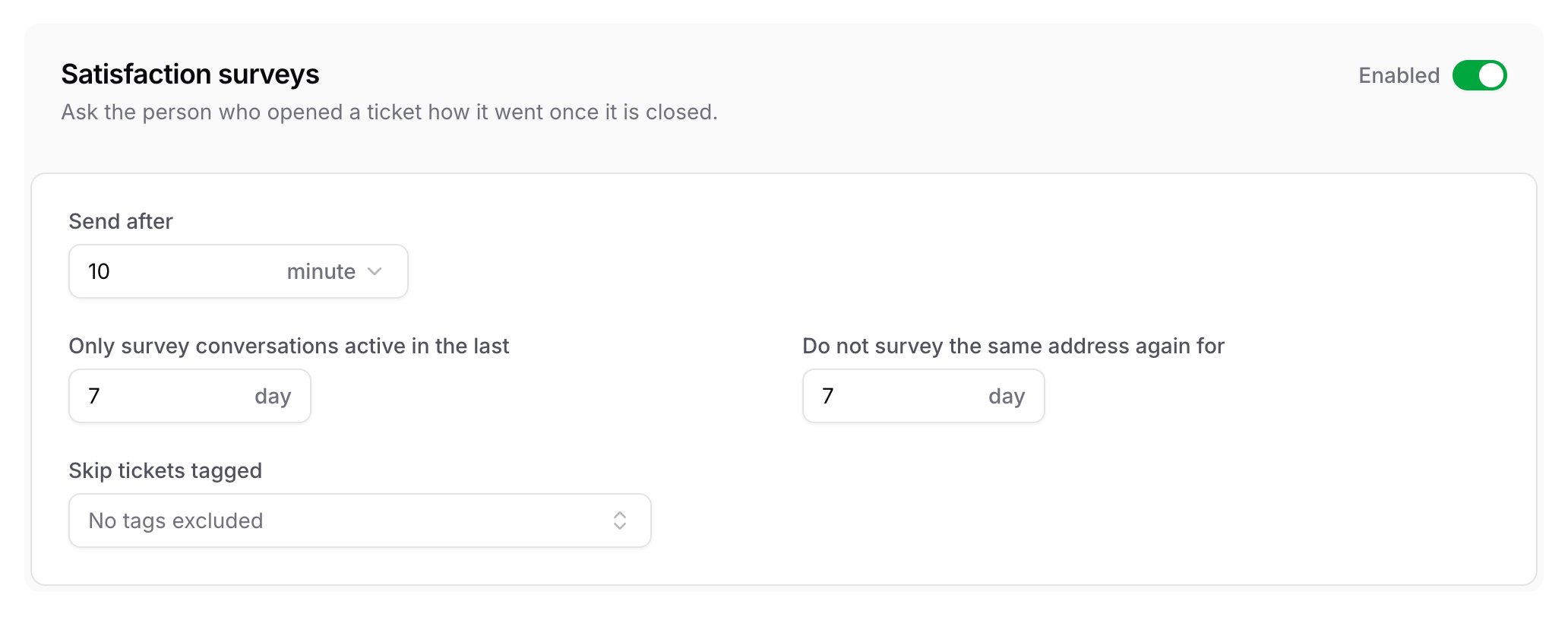
Settings
Timing
Send from
The address the survey comes from. The list offers, in this order:noreply@on the agent’s own Chatbase mail subdomain. This is the default and needs no setup.noreply@on each domain you have verified under Email settings. Sending from your own domain makes the survey recognisable in the inbox.- Every mailbox you have configured on those domains.
noreply@ address does not need to exist as a mailbox. Replies to the survey email are not read.
Subject
Defaults to How did we do?. Type{{ to insert a ticket field such as {{ticket.subject}} or {{ticket.number}}; it is filled in when the email is sent.
Introduction
Optional text shown above the two rating buttons. The editor supports bold, italics, lists and links, and the same{{ picker for ticket fields. Leave it empty and the email opens straight with the question.
What the customer receives
The email carries your introduction, the question Rate your support experience, a green Good button and a red Bad button, and a footer saying that replies are not read. The two buttons lead to the same page, which does the rest.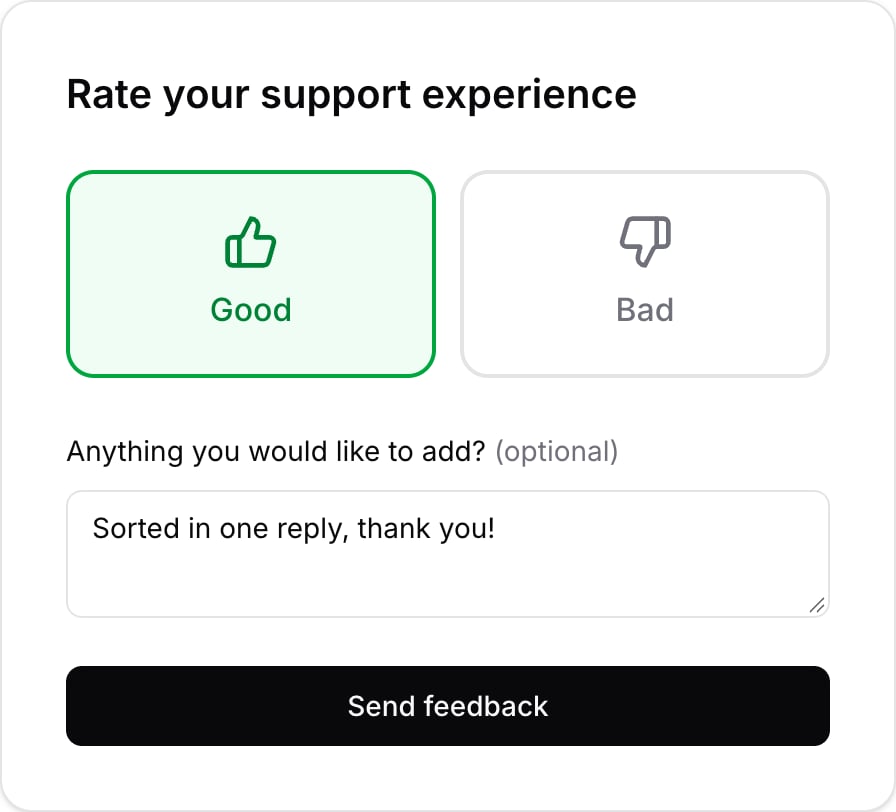
The survey page. The rating the person clicked in the email is already selected. Nothing is recorded yet, so link scanners and mail previews that follow the link do not create answers. The person can switch their choice, add a comment of up to 2,000 characters, and click Send feedback.
After sending, a thank-you screen confirms the answer and offers Change your answer. The link stays valid for 30 days, and the answer can be changed any time in that window. A link that has expired, or that was never issued, shows a short message explaining that survey links work for a limited time.
Where the answers show up
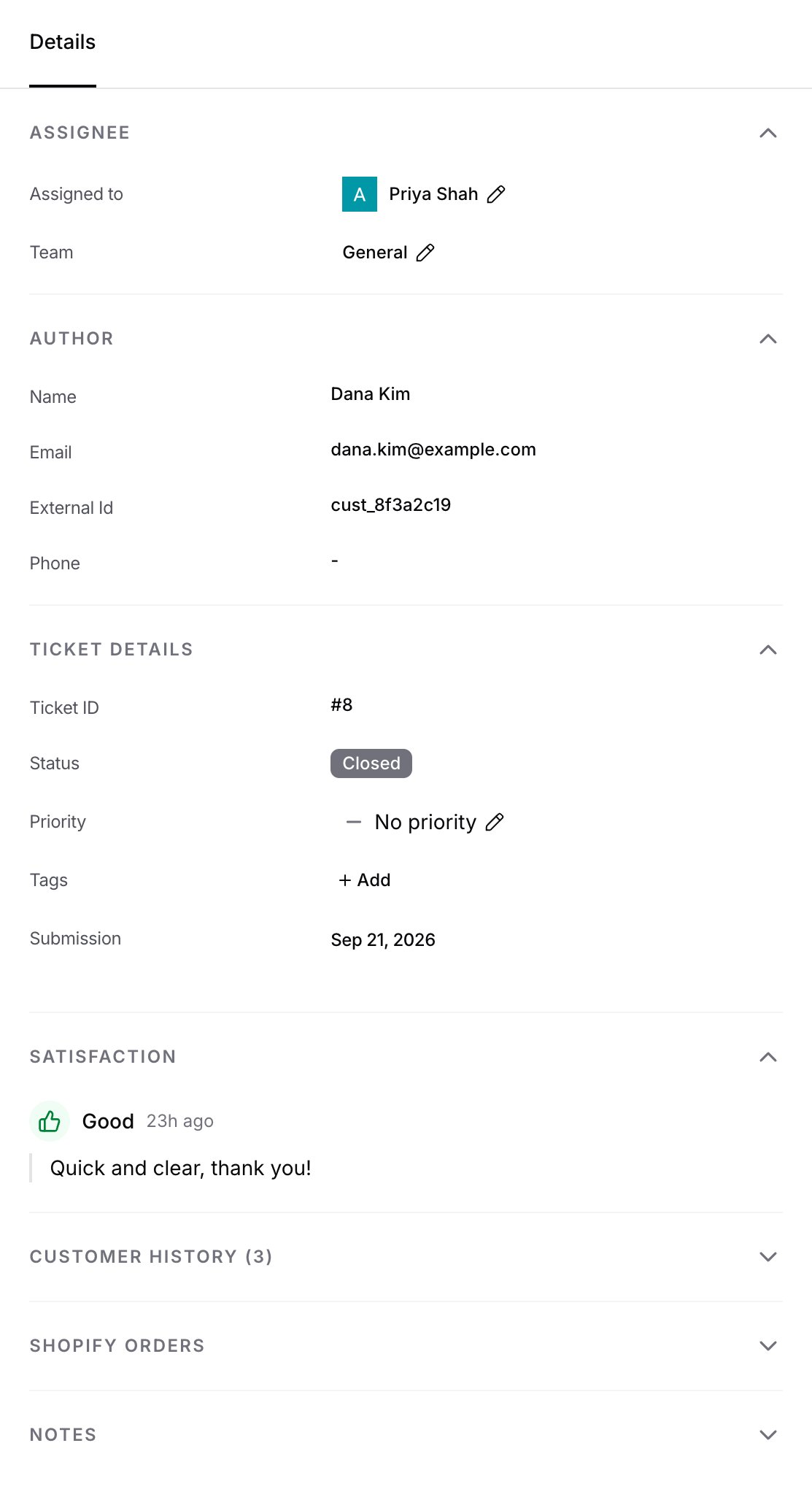
Answers land in two places. Each ticket carries its own rating in the right-hand panel, so an agent sees the verdict next to the conversation it belongs to. Helpdesk analytics rolls every answer up into a CSAT score, a response rate and coverage, with a list of the individual responses behind it.On the ticket
The Satisfaction section in the ticket’s right-hand panel shows one of:
- Sent, with the time the email went out, while an answer is pending.
- The rating as a thumb, the comment if there is one, and when it was answered.
- Not surveyed, with the reason, when a check failed or the email could not be delivered.
In Analytics
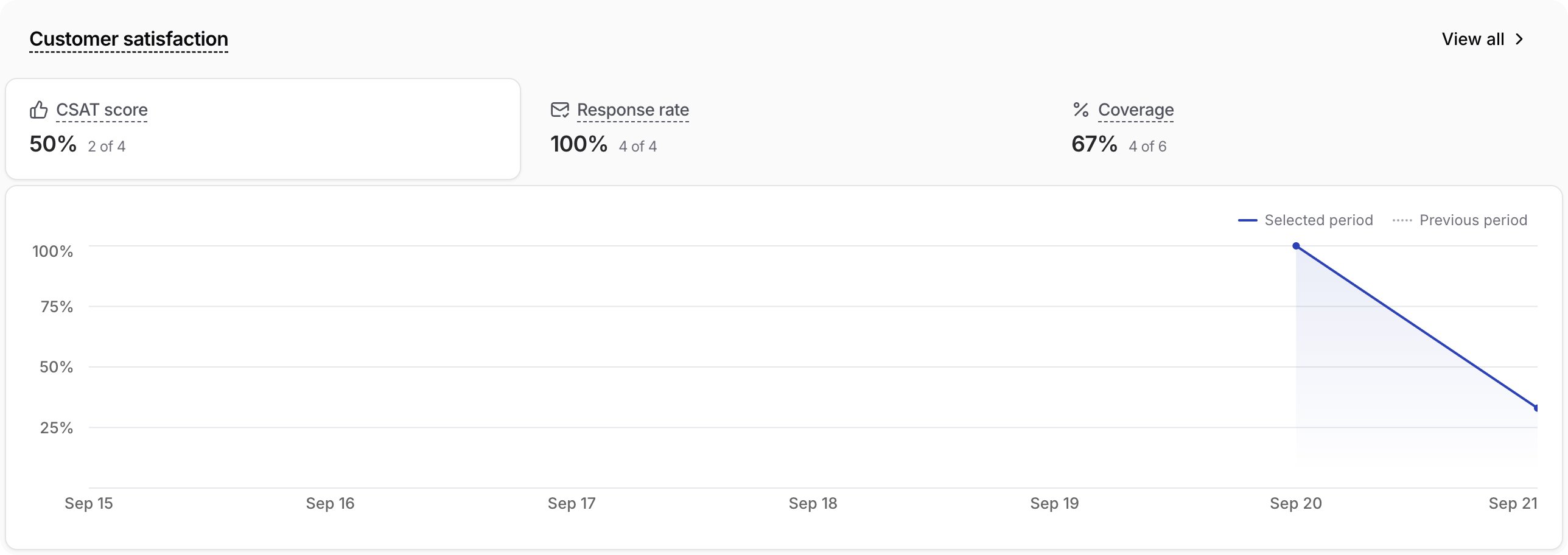
The Customer satisfaction card on the Helpdesk analytics page shows three figures for the selected period, each with its underlying counts and its change against the previous period:- CSAT score: answers rated Good as a share of all answers.
- Response rate: answered surveys as a share of surveys sent.
- Coverage: surveys sent as a share of closed tickets that could have been surveyed. Channels that cannot receive email are left out of the denominator.
Survey responses
View all on the card opens the responses list. The top shows the coverage bar and a breakdown of skipped tickets by reason.Below it, the most recent 100 answers each show the rating, the comment, the ticket subject with a link into the Helpdesk, the requester, when they answered, and Handled by with the teammate’s name.
Who gets credit
Each survey is credited to the teammate assigned to the ticket at the moment it was closed. Reassigning the ticket afterwards, or the teammate leaving the workspace, does not move the credit. A ticket closed with nobody assigned shows Unassigned when closed.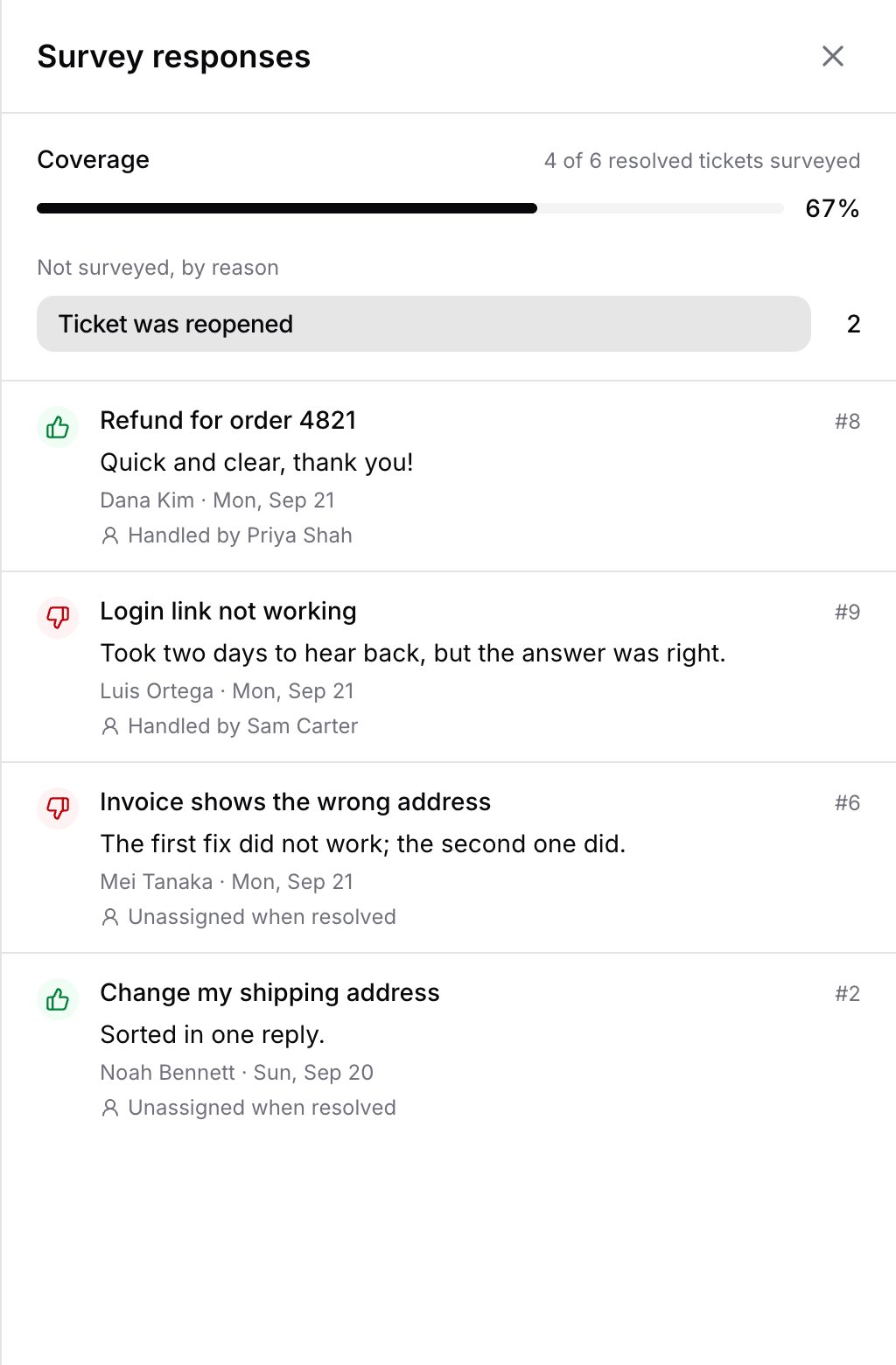
Good to know
- The survey does not thread onto the ticket. A customer who replies to it gets no answer, and the ticket is not reopened.
- If the email cannot be delivered, the ticket shows Not surveyed with the reason Email could not be sent. Closing the ticket again after fixing the sender retries it.
- Cancelled tickets are never surveyed, and neither are tickets closed while the switch is off or in draft.
- Survey comments are written by customers and shown to your team as written. Treat them as you would any message from a customer.